Processing a single document is not a huge problem. Manual entry is manageable if only one PDF document is required.
You can now multiply this work over hundreds of businesses, many accounts, and numerous statement periods.
The problem has changed. The issue changes. Better bank statement conversion doesn’t just mean making one document more efficient. It’s crucial to design a process which works even when the volume of documents grows.
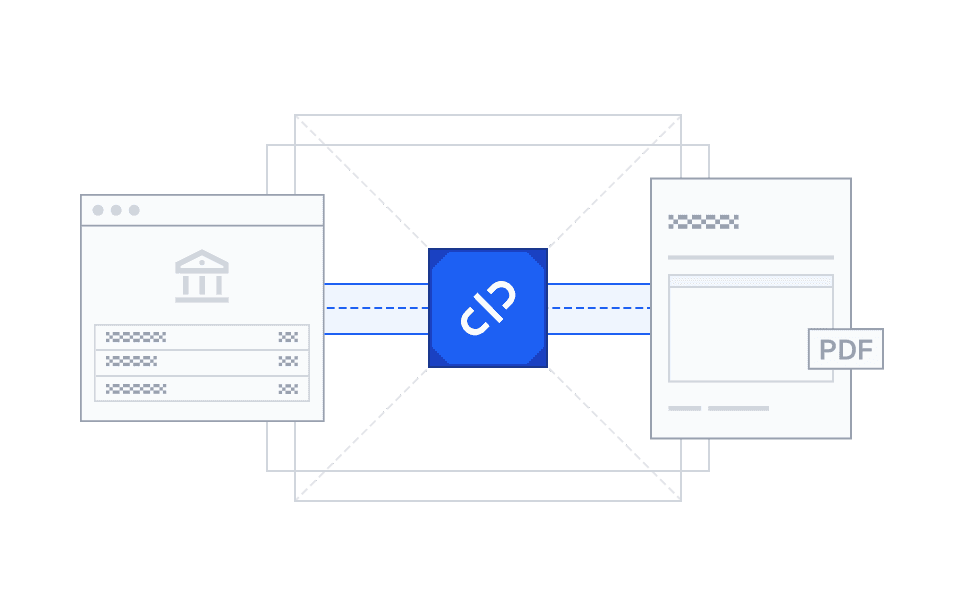
Image credit: docubrew.com
The problem is in repetition.
Imagine a company in accounting that receives PDFs each month from multiple clients. One client has Chase and the other Wells Fargo. Others send statements from Bank of America or Capital One.
The same work is repeated each time you open a PDF file and manually input every transaction.
A bank statement convertor can modify the workflow to ensure that it is no longer transcription, but rather review. Docubrew removes transaction information from the statements themselves rather than estimating financial values creating structured files that can be checked before being used. This is a benefit when the number of documents increases.
Batch Processing Modifies Equation
Handling files individually may be suitable for occasionally needed conversions. Accounting firms are often faced by a totally different situation. Docubrew lets multiple documents to upload and be processed in one batch, with distinct results. So, a company can manage a variety of client files without manually creating every transaction table.
If the accounting workflow requires CSV files users can change the bank statement’s format to CSV prior to moving forward.
Similar to the scanned paper documents. Docubrew offers OCR for PDFs that are scanned, which can be useful when your client’s historical records comprise an amalgamation of native PDFs and scanned files.
Create Output to complete the Accounting Work Ahead
The process of conversion isn’t completed. Most transactions require a destination.
Docubrew supports exporting CSV, Excel and QBO. QBO is a choice for teams who need to export bank statements into Quickbooks. It’s also available in a general spreadsheet format.
Firms that regularly convert bank statements to Quickbooks can build a more consistent process around receiving statements, processing them, checking the extracted data, and preparing the appropriate files for the accounting workflow.
Human-based review is still essential. Automating repetitive transcription is a possibility to be done, but bookkeepers are still responsible for making sure that financial data is accurate and completing accounting work.
Information from clients is a Workflow Decision in Itself
A higher volume of documents also means handling more sensitive client data.
Docubrew offers two different processes. Windows desktop applications perform conversions locally. Files are able to remain on the computer. Docubrew claims that cloud uploads are secure and the uploaded files as well as transformed files will be automatically deleted after 24 hours.
Accounting practices may choose the most appropriate method for their internal management needs.
Scale-based Processes, not Repetitive Work
A growing bookkeeping practice should lead to more financial documents. The practice shouldn’t be able to automatically accommodate more copy-and-paste.
If you’re dealing with 50 clients can the same process that worked for five clients work?
The way that statements are received, evaluated and made available to accounting software will aid firms in creating a workflow that can handle recurring volumes, rather than making each PDF an entirely new manual task.